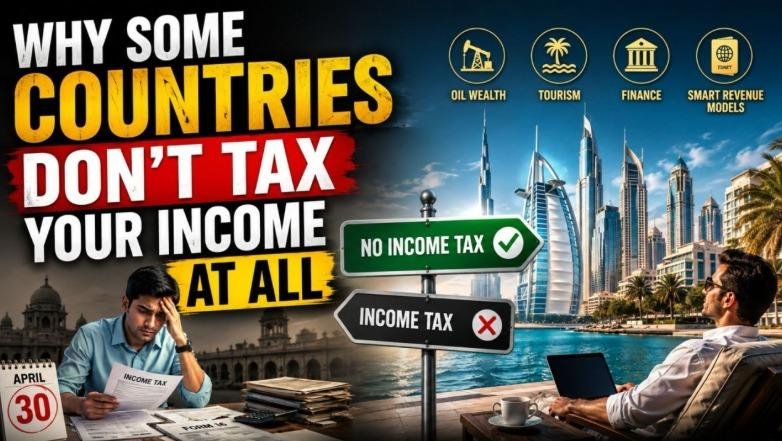
Every April, millions of Indians calculate, file, and pay. Meanwhile, residents of certain countries go through the entire year without owing any money whatsoever on account of personal income tax. They know of no slab rates, no Form 16, nothing!
Now this is not a loophole. It is a deliberate economic model, and it works but only under specific conditions.
The Oil Equation
The Gulf states are the most straightforward example. The UAE, Qatar, Kuwait, Bahrain, and Oman sit on some of the world’s largest hydrocarbon reserves. Oil and gas revenues flow directly into government coffers at a scale that makes personal income tax unnecessary. When the ground beneath you funds the state, there is no need to reach into residents’ salaries.
The UAE added VAT at 5% in 2018 as oil revenues became less predictable, but personal income tax remains absent. The government funds itself. Residents keep their full earnings
When the Model Is Tourism and Finance
Not every tax-free country has oil. The Bahamas runs on tourism, VAT, and stamp duties. Monaco funds itself through financial services, VAT, and its status as a magnet for high-net-worth residents who bring capital with them. St. Kitts and Nevis has built a revenue model around financial services and citizenship-by-investment programs.
What these economies share is a narrow, high-yield revenue base that does not require broad-based personal taxation to sustain government spending.
What Zero Income Tax Does Not Mean
Living in a tax-free country rarely means living in a tax-free environment. VAT, property taxes, customs duties, and fees exist in most of these jurisdictions. The UAE has VAT. Monaco has wealth and property-related levies. The Bahamas charges stamp duties on real estate transactions.
The personal income tax is gone. The tax system is not.
The Less Shiny Part
Not every country with no income tax is actually livable. Nauru has no income tax. The absence of personal income tax in those cases reflects the absence of a functioning fiscal system, not a policy choice. Infrastructure, stability, and basic services are the things income tax typically funds, and their absence tends to make itself felt.
For the countries where zero income tax is a genuine policy model rather than a symptom of state failure, the underlying requirement is the same: an alternative revenue source large enough, and stable enough, to replace what personal taxation would otherwise generate.
The Broader Point
Tax policy is essentially a question of where government revenue comes from. Income tax is the answer most countries settle on because it scales with economic activity and is relatively predictable. The countries that have avoided it have either found something more valuable underground, built an economy where visitors and capital do the hard labour, or both.
For everyone else, April remains unavoidable.