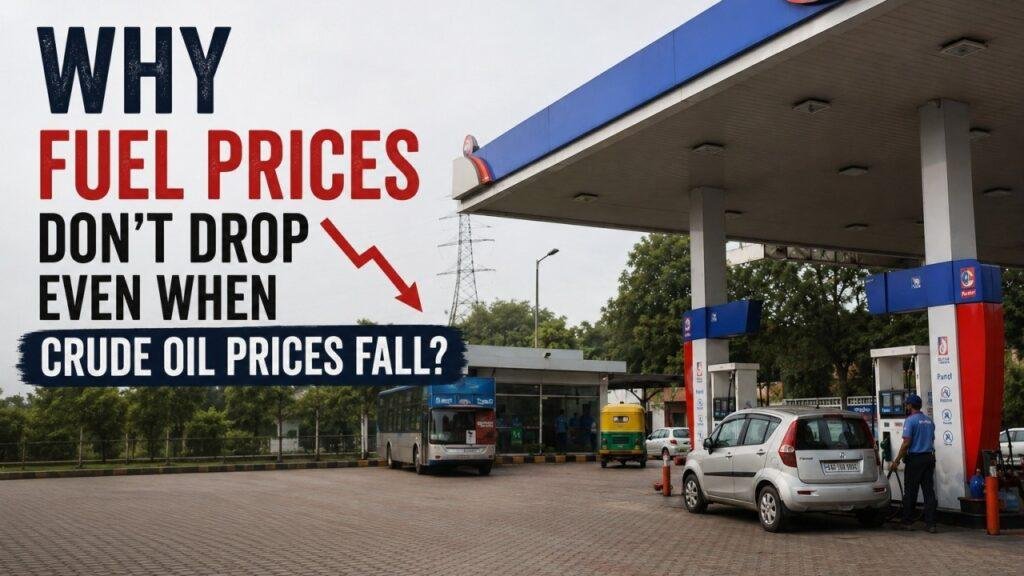
Crude oil prices just fell down after months of chaos around the Strait of Hormuz. Your petrol pump still charges close to what it did last week.
But why?
What actually happened
The Iran war pushed Brent crude from around 65 dollars a barrel to over 80 within days, once Iran restricted traffic through the Strait of Hormuz, the route that carries a fifth of the world’s oil. India responded by cutting excise duty by 10 rupees per litre in March, absorbing part of that spike itself so pump prices wouldn’t jump with it.
Now that a ceasefire and a partial reopening of the strait have brought crude back near 72 to 74 dollars a barrel, you’d expect fuel prices to drop with it. Well, they haven’t fallen at the same rates.
Less than half of what you pay at the pump is the cost of crude oil itself. The rest is excise duty, state VAT, dealer commission, and transport cost, and these don’t move automatically with the international oil price.
That excise duty cut in March meant the government absorbed part of the spike rather than passing the full cost to you immediately. Whether that duty gets adjusted again as crude falls depends on inflation levels, the fiscal deficit, oil company margins, and how much political room there is to change it, not just the price of Brent crude on a given day.
So…
Crude oil still matters, it shapes import costs and how much room oil companies and the government have to move prices at all. But it’s only part of the equation. Taxes and policy decisions absorb a large share of the swings in both directions, which is why the crude oil headline and the number on the petrol pump display rarely move in sync.